


Probiotics have become a daily essential for many Malaysians who want to improve digestion, strengthen immunity, and maintain overall good gut health. If you’ve ever walked down the supermarket aisle or browsed online pharmacies in Malaysia, you’ve probably notices how many probiotic products are out there – from convenient probiotic drinks to capsule supplements with names that sound scientific, there’s now a wide range of choices to fit every lifestyle.
With so many products claiming unique benefits, searching for the best probiotics in Malaysia can feel overwhelming. That’s where this guide comes in. Compiled by Yakult’s nutrition experts, it cuts through the noise to help you understand the different probiotic formats, key strains that truly matter and what you should know before choosing the right probiotics for your needs. So, whether you are new to probiotics or looking to upgrade your current choice, this complete guide will help you make an informed decision for your body and lifestyle.
What Are Probiotics, and Why Does Malaysia Need Them?
Before diving into best probiotics in Malaysia, let’s clear up a common confusion. Many people mix up the words probiotics, prebiotics, and antibiotics. They may sound similar, but they play very different roles in your health. Antibiotics kill harmful bacteria that cause infections, prebiotics are food that helps good bacteria grow. And probiotics? Here’s where the magic happens; they are friendly live bacteria that help keep your gut balanced and healthy.
- Definition
According to the joint Food and Agriculture Organization (FAO) / World Health Organization (WHO) working group, probiotics are defined as:
“live microorganisms that, when administered in adequate amounts, confer a health benefit on the host.” ¹
In practice, this means the microbial strain must be clearly identified, safe for human use, and shown in clinical studies to deliver a benefit when taken in sufficient quantity.
- Local Relevance
In Malaysia, maintaining a healthy gut has become increasingly important as modern eating habits and fast-paced lifestyles continue to affect digestive health. Recent findings from Ministry of Health Malaysia (MOH) show that many Malaysians are not meeting the recommended daily intake of fruits and vegetables, while sugar and salt consumption remain above healthy limits.
According to the National Health and Morbidity Survey 2024, only 17.1% of adults consume at least two servings of fruit daily, while just 12.2% reach the target of three servings of vegetables.2 In addition, 47% of adults exceed the recommended sugar intake and 75.9% consume more than 5 grams of salt per day.2,3 Meanwhile, MOH data also indicate that diseases of the digestive system accounted for 4.25% of underlying causes of death in public hospitals in 2022.4 Adding to this, a 2020 review on Malaysia’s nutrition transition highlights how urbanisation and sedentary lifestyles have changed the way Malaysians eat and live, with over three-quarters of the population now residing in cities and urban areas.5 This shift has led to reduced physical activity, more frequent eating out, and greater reliance on convenient or processed foods.
These nutritional and lifestyle patterns – high in sugar and salt but low in fibre and plant-based foods, combined with limited physical activity can disrupt the balance of gut bacteria and weaken overall digestive health over time.
- The Regulatory Landscape
Before buying any probiotic product in Malaysia, it helps to know how they are regulated.
The National Pharmaceutical Regulatory Agency (NPRA), under the Ministry of Health Malaysia (MOH) plays a key role in ensuring the safety and quality of health-related products – including probiotics. NPRA regulates supplements, cosmetics and products making medicinal claims to make sure the products meet approved standards before reaching consumers.
Many Malaysians often wonder – are probiotic supplements and probiotic drinks the same thing? The answer lies in how they are classified and regulated. In Malaysia, product containing probiotics can fall under two main categories: health supplements or functional foods.6 Here’s a simple comparison to help you understand the difference:
| Aspect | Health Supplements | Functional Foods |
|---|---|---|
| Regulatory Authority | National Pharmaceutical Regulatory Agency (NPRA) | Food Safety and Quality Division (FSQD) |
| Main Purpose | To supplement the diet by providing additional nutrients or beneficial substances | To provide extra health benefits beyond basic nutrition as part of the normal diet |
| Product Form | Tablets, capsules, powders, concentrated liquids | Ordinary food or beverages |
| Health Claims | Must be supported by scientific evidence. May state general or nutritional claims, functional claims, or disease risk reduction claims. Should not imply to treat, cure or prevent disease. | May carry nutrient and generic function claims if supported by scientific evidence. Disease-related claims (prevention, treatment, or risk reduction) are not allowed. |
| Registration / Approval | Must be notified with NPRA and carry a notification number | Must comply with FSQD labelling and safety standards |
| Examples | Probiotic capsules, vitamin tablets, herbal supplements | Probiotic drinks (e.g. Yakult), fortified milk and fruit juices, high-fibre cereals |
Understanding these differences helps consumers make informed decision and choose probiotic products that are not only effective but also comply with Malaysia’s safety and regulatory standards.
Probiotics in Malaysia: A Practical Comparison Guide
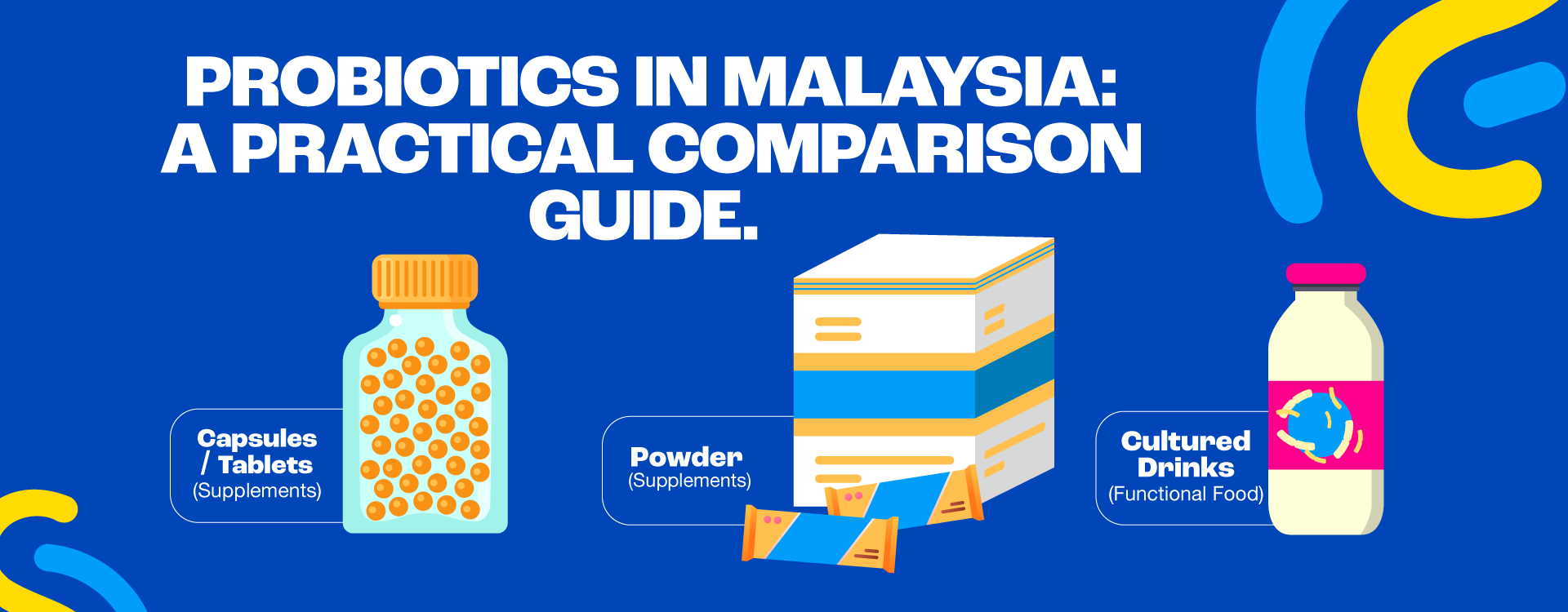
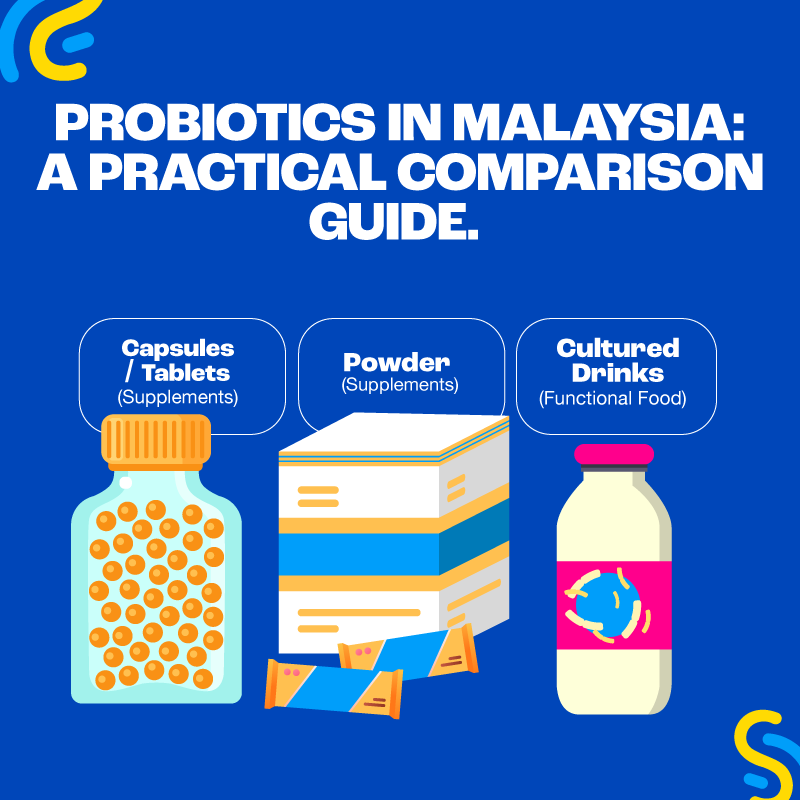
When it comes to probiotics, there is truly no “one size fits all”. Not all probiotics work the same way and that’s what make them so unique. Malaysians today can find probiotics in many forms, from daily drinks to capsules and convenient sachets. Each format has its own strengths, depending on your lifestyle, preferences and health goals.
Here’s a quick comparison to help you find the one that fits you best.
| Format | Description | Pros | Cons |
|---|---|---|---|
| Capsules / Tablets (Supplements) | Probiotic formulated in capsule or tablet form, often designed for higher probiotic counts (CFU) with good stability. |
|
|
| Cultured Drinks (Functional Food) | Probiotic beverages, such as Yakult, produced through fermentation and consumed as part of the daily diet. |
|
|
| Powder (Supplements) |
Probiotics in powdered form, designed to be versatile and dissolvable, commonly packed in sachets. |
|
|
Key Probiotic Strains in the Malaysian Market
What sets one probiotic apart from another is the specific strains they contain. Think of them like “good bacteria with different jobs” – some strains protect your gut, some help with digestion, and others boost your body’s defences. In Malaysia, several key strains have gained attention for their extensive research and clinically proven benefits.
- Lactobacillus Species
The term Lactobacillus refers to a diverse group of lactic-acid-producing bacteria that are widely used as probiotics around the world. These beneficial bacteria naturally live in the human gastrointestinal tracts, helping to maintain a balanced and healthy gut microbiota environment. Lactobacillus strains are valued for their ability to survive harsh conditions in the gut, adhere to the intestinal lining, produce useful compounds such as acid lactic, and support overall digestive and immune function.7 Because of these strengths, they are commonly included in many functional foods and supplements.
Some well-known Lactobacillus species found in commercial probiotic products include Lactiplantibacillus plantarum, Lacticaseibacillus casei, Lactobacillus acidophilus, Lacticaseibacillus paracasei, Lacticaseibacillus rhamnosus, Lactobacillus crispatus, Lactobacillus gasseri, Lactobacillus reuteri, Lactobacillus bulgaricus.7,8
-
- Cultured milk drinks (fermented beverages): Often contain Lacticaseibacillus casei, Lacticaseibacillus paracasei, Lacticaseibacillus rhamnosus, Lactobacillus acidophilusand Lactobacillus bulgaricus.
- Supplements (capsules, tablets, powders): Lactobacillus is a common ingredient in over-the counter dietary supplements available in various form, often contain Lacticaseibacillus rhamnosus, Lactobacillus acidophilus, Lacticaseibacillus casei, Lactiplantibacillus plantarum
Although each Lactobacillus strain has its own unique characteristics, they all offer several important health benefits. These probiotics help with digestion by breaking down food, relieve digestive discomfort and promoting regular bowel movements. Certain strains have also been shown to prevent and treat various types of diarrhea. Beyond digestion, Lactobacillus may help regulate the immune system and support the body in controlling inflammation and allergic reactions.7
- BifidobacteriumSpecies
Bifidobacterium is one of the most common types of good bacteria that colonize your gut. Research shows that these bacteria are most abundant during infancy, but their numbers start to drop after weaning and continue to decrease as we age. Even so, Bifidobacterium remains an important part of adult gut microbiota, mainly in the large intestine where these probiotics play an important role in keeping the gut environment healthy and balanced.9 Unlike some other probiotics, Bifidobacterium is anaerobic, meaning it thrives in environment with very little or no oxygen.10 Because of this, it is highly sensitive to oxygen, making it more challenging to keep these bacteria alive in probiotic products especially dairy products that naturally contain some oxygen during processing and storage. Maintaining the viability of Bifidobacterium is essential, as its health benefits depend on the bacteria remaining alive and active.
Bifidobacterium can be found in fermented foods such as yogurt, cheese, and buttermilk, where it is used as a starter or supportive culture. During the production of these dairy products, how the food is processed and stored can affect how well Bifidobacterium survives. Factors such as acidity, exposure to oxygen, heat, and storage conditions may reduce the number of live bacteria if not properly controlled. To improve its survival and viability, manufacturers may reduce the dissolved oxygen content in milk using methods such as deaeration or electroreduction. They may also add other beneficial bacteria (oxygen-scavenging bacteria), like Lactococcus lactis strains, or oxygen-scavenging compounds such as ascorbic acid, cysteine or glucose oxidase, which help lower the oxygen levels.10 In addition, Bifidobacterium species and strains that are more tolerant to low levels of oxygen and processing stress are often selected.10 These approaches help create a suitable environment for Bifidobacterium, allowing it to remain alive throughout the product’s shelf life, such as in yogurt, and provide health benefits when consumed.
Once Bifidobacterium reaches the gut alive, it begins to play an important role in digestive health – It helps break down dietary fiber, produce beneficial short-chain fatty acids and prevent harmful bacteria from taking over. Because of these functions, Bifidobacterium species are often used in supplements to support digestion and boost immunity.11 Common species include Bifidobacterium longum, Bifidobacterium bifidum, and Bifidobacterium breve. Each has slightly different benefits, but generally they help to reduce constipation and improve bowel movement, while also supporting immune function.11,12 Some studies also suggest that Bifidobacterium species may help relieve symptoms of irritable bowel syndrome (IBS), improve the symptoms of lactose intolerance and reduce the incidence of antibiotic-associated diarrhea.12
- Lacticaseibacillus paracasei Shirota strain (LcS)
If you have ever enjoyed a small bottle of Yakult, then you have already met the world’s famous probiotic strain – Lacticaseibacillus paracasei Shirota strain (often shortened to LcS). This powerful “good bacteria” isn’t just another name on a label; it has nearly a century of science behind it. Discovered by Dr. Minoru Shirota in 1930, this unique strain was carefully selected for its ability to survive the harsh journey through the stomach and reach the intestines alive. Once there, it helps maintain a healthy of gut bacteria and supports overall digestive health.
What makes LcS truly special is its proven strength and consistency. LcS has been extensively studied inhuman clinical trials for more than 90 years. Its benefits go beyond digestion; research has shown that LcS helps improve overall gut balance and immune response in both healthy individuals and those with specific gut-related conditions.
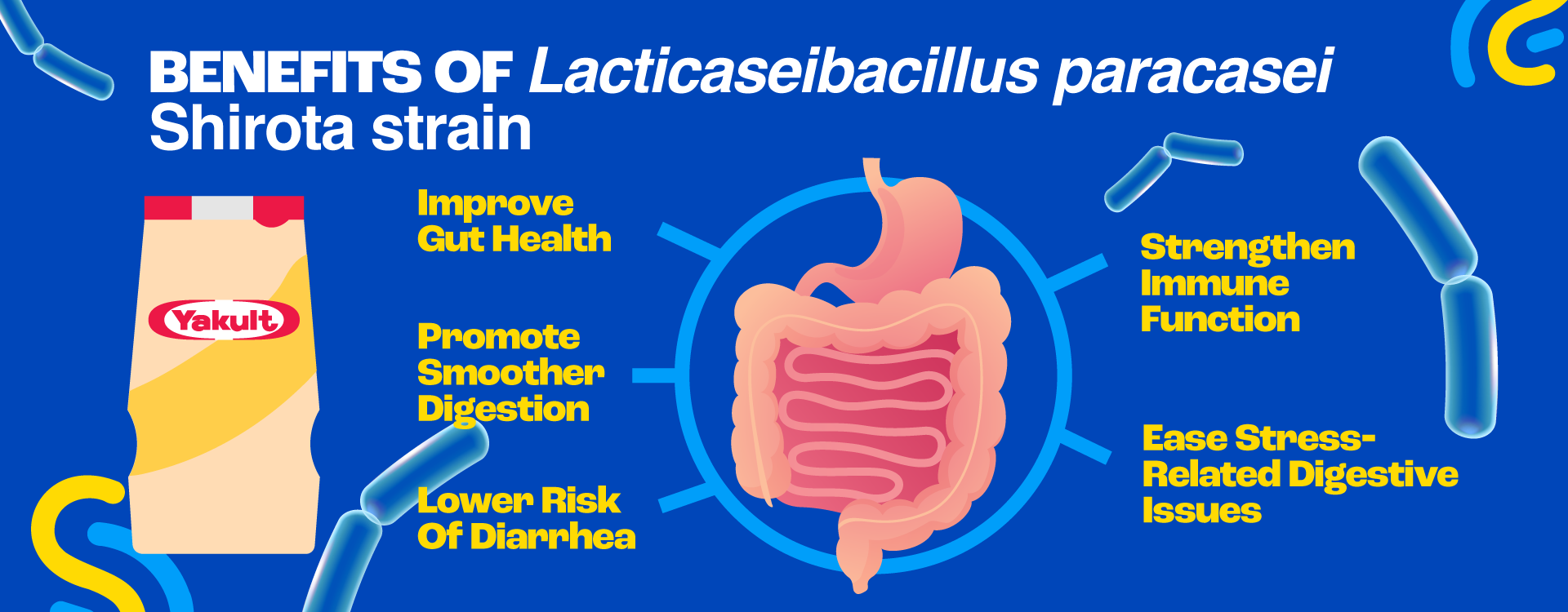
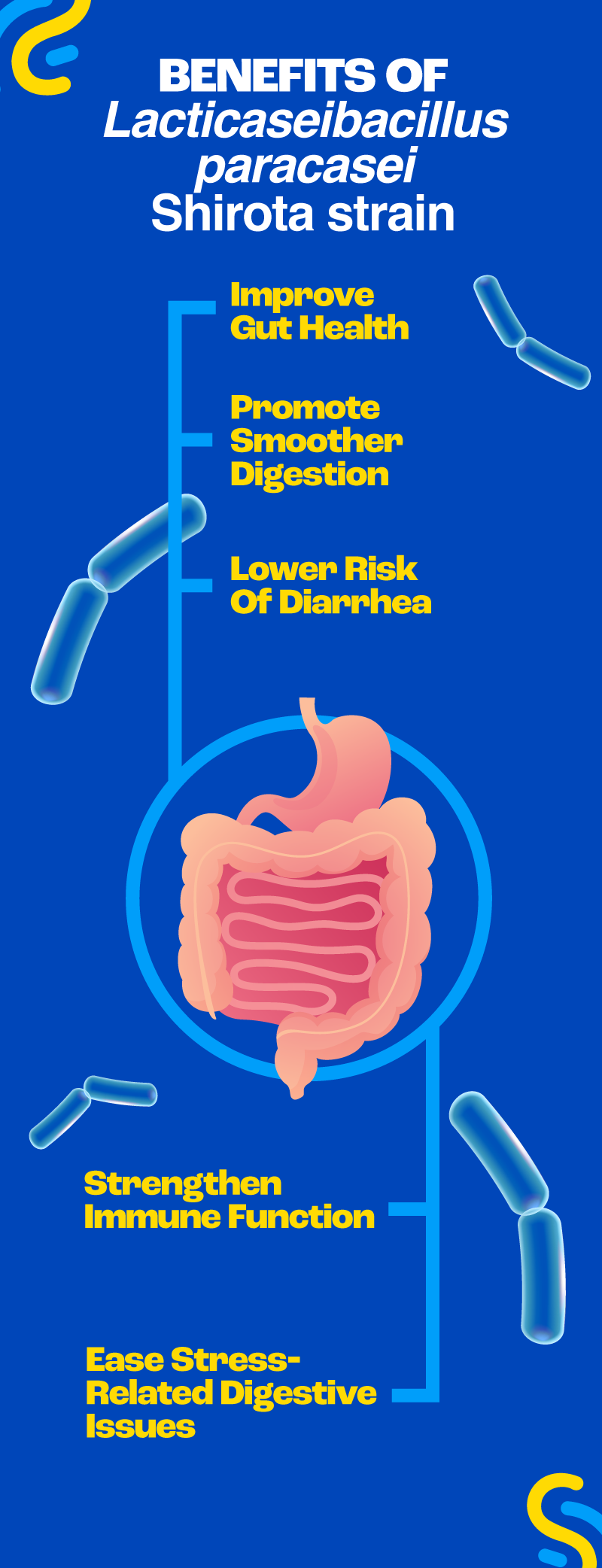
Here are some of the clinically proven benefits of Lacticaseibacillus paracasei Shirota strain:
- Improve intestinal health: regular intake helps increase beneficial bacteria and reduce harmful bacteria in the gut.13
- Supports smoother bowel movement: studies show Shirota strain helps reducing stool hardness and defecation straining.14
- Lowers risk of diarrhea: proven to help prevent antibiotic-associated diarrhea and shorten recovery time in mild cases.11
- Strengthen immune function: LcS supports the body’s natural defences by improving gut barrier integrity and stimulating immune cells.15
- Reduce stress-related digestive symptoms: research links Shirota strain to reduce anxiety-related gut discomfort, reflecting the gut-brain connection.16
Under Malaysia’s Food Regulations 1985, only specific probiotic strains that have been scientifically evaluated for safety and efficacy can be used in cultured milk. One of these approved strains is Lacticaseibacillus paracasei Shirota strain — the same strain found in Yakult.
Why Yakult’s Shirota Strain Dominates the Malaysian Functional Drink Space


In the crowded world of probiotics, one name continues to stand out – Yakult.
For more than 90 years, Yakult has been a global pioneer in probiotic science, built on the vision of Dr. Minoru Shirota, who first discovered the Lacticaseibacillus paracasei Shirota strain in 1930. Since then, the Shirota strain has been extensively studied by Yakult’s research institutes which continue to lead in probiotic innovation through both fundamental research and product development. With hundreds of scientific studies published worldwide, Shirota strain is recognized as one of the most thoroughly researched probiotic strains in the world. This depth of research highlights its proven ability to survive stomach acid, reach the intestines alive, and support a balanced gut microbiota.
Ever wondered why so many Malaysians reach for Yakult when they think of probiotics? It’s not just because it tastes good — it’s because of what is inside. In Malaysia, every bottle of Yakult is locally produced at Yakult Malaysia’s ISO-certified facility under strict hygiene and safety standards. The production process adheres to Ministry of Health (MOH) food regulations, and complies with HACCP (Hazard Analysis and Critical Control Point) and GMP (Good Manufacturing Practice) standards. Yakult product is Halal-certified by JAKIM and approved by the Department of Veterinary Services with VHM (Veterinary Health Mark). These certifications ensure that the same scientifically proven Shirota strain enjoyed around the world is delivered fresh, safe, and effective to Malaysians every day.
Not all probiotics are created or delivered the same way. The form they come in can make a big difference in how well they work. While many probiotics are available in capsules or powders, Yakult’s liquid format is specially designed to deliver the live, active Lacticaseibacillus paracasei Shirota strain bacteria directly to the intestines. By suspending these good bacteria in a carefully balanced liquid environment, Yakult helps keep the probiotics alive and stable until consumption. This ensures that a high number of live probiotics survive the harsh journey through stomach acid and reach the gut ready to do their job. Each bottle of Yakult contains 30 billion live Shirota strain cells, ensuring consistent quality and proven effectiveness with every serving.
Unlike many probiotic supplements on the market that promote high-CFU probiotic counts but come with premium prices and complex storage requirements, Yakult takes a different approach by combining science-backed strength with everyday convenience. Each bottle provides billions of live, active Shirota strain in a ready-to-drink format that fits easily into daily routine. For certain individuals, swallowing tablets or capsules can be uncomfortable, meanwhile Yakult offers a simple, enjoyable alternative. It’s an affordable and reliable way to support your gut health with clinically proven probiotic benefits without the cost, hassle, or discomfort often associated with supplements.
Ready to Choose the Right Probiotic?
At the end of the day, the best probiotic is the one you can take consistently. Building a daily habit matters more than chasing the highest CFU count or the newest strain on the market. Whether it’s for better digestion, stronger immunity, or overall gut balance, consistency is key to seeing real results.
Choosing a product supported by strong scientific research and proven strain stability can make a meaningful difference to your gut health journey. It’s important to pay extra attention to probiotic strains that are high in quality and thoroughly studied for their safety and proven benefits to human health. Yakult delivers these advantages in a practical and user-friendly format, allowing consistent daily intake and reliable support for digestive and immune health.
Start your daily Yakult today – A small bottle a day can go a long way toward a healthier gut and a stronger you.
Subscribe to our Home Delivery Service for added convenience and an affordable price, or find Yakult cultured milk drinks at any supermarkets and convenience stores across Malaysia.
References:
[1] Probiotics in food – Health and nutritional properties and guidelines for evaluation. 2001. Available from: https://openknowledge.fao.org/server/api/core/bitstreams/382476b3-4d54-4175-803f-2f26f3526256/content
[2] Wong KYY, Salleh R, Nazrin K, Chan YY. National Health & Morbidity Survey (NHMS) 2024 Nutrition. Institute for Public Health Ministry Of Health Malaysia. 2024. Available from: https://iku.nih.gov.my/NHMS-2024
[3] PEMAKANAN SIHAT, TANGGUNGJAWAB BERSAMA : DAPATAN NHMS 2024 (PEMAKANAN). Portal Rasmi Kementerian Kesihatan Malaysia. 2025. Available from: https://www.moh.gov.my/index.php/pages/view/13165
[4] Health Facts 2023. Health Informatics Centre Planning Division, Ministry of Health Malaysia. 2023 Available from: https://www.moh.gov.my/moh/resources/Penerbitan/Penerbitan%20Utama/4._Health_Facts_2023-compressed_.pdf
[5] Goh EV, Azam-Ali S, McCullough F, Roy Mitra S. The nutrition transition in Malaysia; Key Drivers and recommendations for improved health outcomes. BMC Nutrition. 2020 Jun 29;6(1). https://doi.org/10.1186/s40795-020-00348-5
[6] Lee SY, Yeo SK, Chua CL. Evaluation of commercial probiotic supplements in Malaysia for registration status, labelling compliance, and probiotic contents. Malaysian Journal of Nutrition. 2025 Mar 14;31(1). https://doi.org/10.31246/mjn-2024-0030
[7] Shah AB, Baiseitova A, Zahoor M, Ahmad I, Ikram M, Bakhsh A, et al. Probiotic significance of lactobacillus strains: A comprehensive review on health impacts, research gaps, and future prospects. Gut Microbes. 2024 Nov 24;16(1). https://doi.org/10.1080/19490976.2024.2431643
[8] Sanders ME, Lebeer S. New names for important probiotic lactobacillus species. International Scientific Association for Probiotics and Prebiotics (ISAPP). 2025. Available from: https://isappscience.org/new-names-for-important-probiotic-lactobacillus-species/
[9] Arboleya S, Watkins C, Stanton C, Ross RP. Gut Bifidobacteria populations in human health and aging. Frontiers in Microbiology. 2016 Aug 19;7. https://doi.org/10.3389/fmicb.2016.01204
[10] Sibanda T, Marole TA, Thomashoff UL, Thantsha MS, Buys EM. Bifidobacterium species viability in dairy-based probiotic foods: Challenges and innovative approaches for accurate viability determination and monitoring of probiotic functionality. Frontiers in Microbiology. 2024 Feb 2;15. https://doi.org/10.3389/fmicb.2024.1327010
[11] Robertson R. Why bifidobacteria are so good for you. Healthline. Healthline Media; 2023. Available from: https://www.healthline.com/nutrition/why-bifidobacteria-are-good
[12] Hidalgo-Cantabrana C, Delgado S, Ruiz L, Ruas-Madiedo P, Sánchez B, Margolles A. Bifidobacteria and their health-promoting effects. Microbiology Spectrum. 2017 May 19;5(3). https://doi.org/10.1128/microbiolspec.bad-0010-2016
[13] Kato-Kataoka A, Nishida K, Takada M, Kawai M, Kikuchi-Hayakawa H, Suda K, et al. Fermented milk containing lactobacillus casei strain Shirota preserves the diversity of the gut microbiota and relieves abdominal dysfunction in healthy medical students exposed to academic stress. Applied and Environmental Microbiology. 2016 Jun 15;82(12):3649–58. https://doi.org/10.1128/aem.04134-15
[14] Chen S, Ou Y, Zhao L, Li Y, Qiao Z, Hao Y, et al. Differential effects of lactobacillus casei strain shirota on patients with constipation regarding stool consistency in China. Journal of Neurogastroenterology and Motility. 2019 Jan 30;25(1):148–58. https://doi.org/10.5056/jnm17085
[15] Nagao F, Nakayama M, Muto T, Okumura K. Effects of a fermented milk drink containing lactobacillus casei strain Shirota on the immune system in healthy human subjects. Bioscience, Biotechnology, and Biochemistry. 2000 Jan 1;64(12):2706–8. https://doi.org/10.1271/bbb.64.2706
[16] Takada M, Nishida K, Kataoka‐Kato A, Gondo Y, Ishikawa H, Suda K, et al. Probiotic lactobacillus casei strain Shirota relieves stress‐associated symptoms by modulating the gut–brain interaction in human and animal models. Neurogastroenterology & Motility. 2016 Feb 20;28(7):1027–36. https://doi.org/10.1111/nmo.12804
About The Author
This content is reviewed and/or written by the Yakult Malaysia Editorial Team of dietitians, nutritionists, and food technologists to ensure scientific accuracy. Learn more about our expert team and editorial standards here.